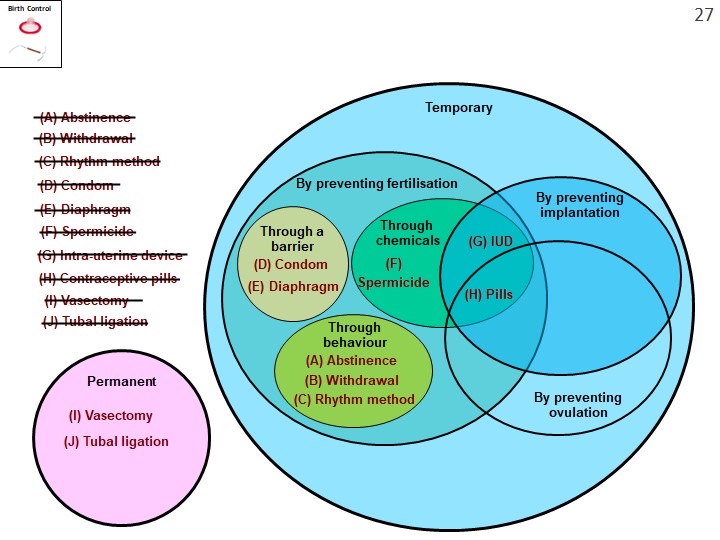
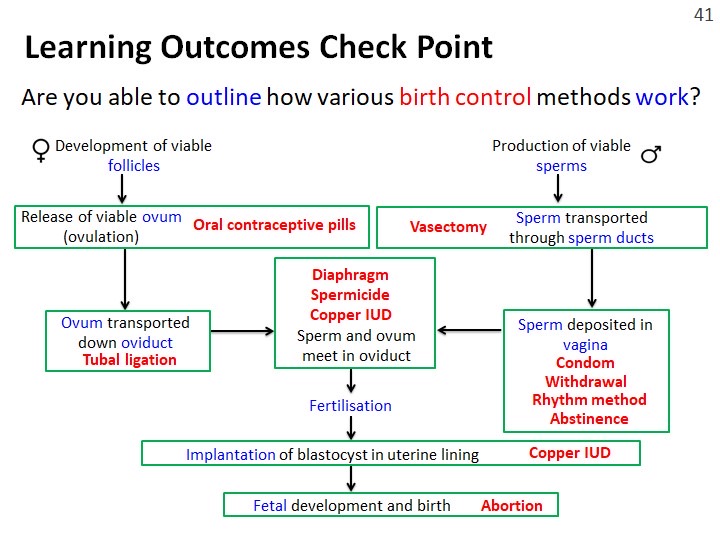
- Works by preventing ovulation, fertilisation or implantation of the blastocyst
Behavioural
Abstinence
- Refrain from sexual intercourse and/or sexual contact
- Prevents sperm from entering vagina
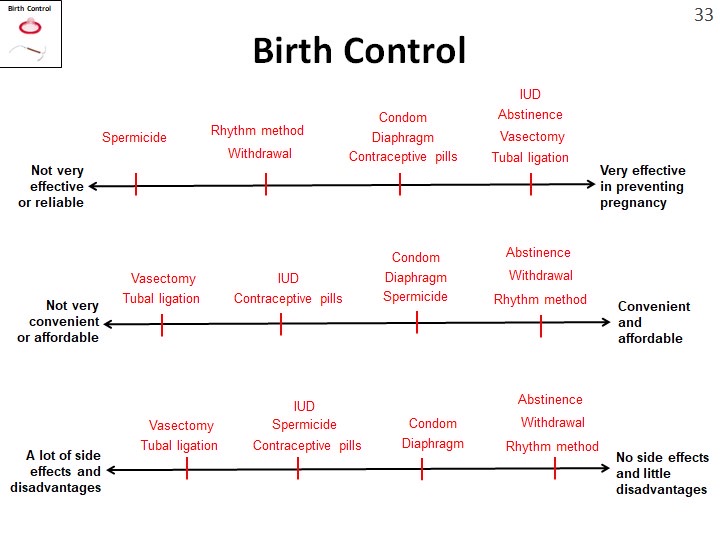
- Free
- Highest success in preventing pregnancy
- Protect against STIs
- Requires willpower of both partners
- May find it difficult to do for long periods of time
Withdrawal
- Man removes penis out of vagina during sexual intercourse and ejaculates outside the vagina, away from female’s external genitalia
- Prevents sperm from entering vagina
- Free
- Low success in preventing pregnancy
- Requires willpower and experience from male
- Male’s pre-ejaculate may contain sperm
- Does not protect against STIs
Rhythm
- Avoids having unprotected sex during fertile phase of woman’s menstrual cycle
- Prevents fertilisation as sperm will not meet ovum
- Free
- Low success in preventing pregnancy
- Does not protect against STIs
- Difficult to adhere to
- Tracked via:
- Rise in basal body temperature (0.4°C - 0.8°C rise)
- Cervical mucus turns from white and sticky to clear, slippery and stretchy
Chemical
Spermicide
- In foam, cream, jelly, film, suppository or tablet forms
- Inserted into the vagina before sexual interourse
- Inactivates or kills sperm, preventing them from meeting the ovum and thus prevents fertilisation
- Relatively cheap
- Very low success in preventing pregnancy
- Irritates the reproductive organs
- Does not protect against STIs and increases risk of it
Barrier
Condom
- Forms a barrier to prevent sperm from entering the vagina as it can’t pass through the material
- Male:
- Thin rubber/Plastic tube that covers erect penis before sex
- Small teat at tip collects semen
- Female:
- Plastic tube with flexible ring at each end that is placed in the vagina before sex
- Moderate success rate
- Relatively cheap
- Protects against STIs
- Single use
- Possible allergies and requires cooperation from both partners
Diaphragm
- Dome shaped rubber/silicone cap with elastic rim that is placed over the cervix to cover it
- More effective when used with spermicide
- Forms a barrier to prevent sperm from entering the cervix as it can’t pass through the diaphragm
- Relatively cheap and reusable
- Moderate success in preventing pregnancy
- Does not protect against STIs
- Needs to be left inside the vagina of at least six hours after sexual intercourse before being removed
- Increased risk of bacterial infection
Copper Intrauterine Device
- IUD inserted into uterus by doctor to prevent fertilisation and implantation
- Small deive
- Made of T shaped plastic frame with copper wires around it
- Inserted int uterus by health care provider
- Copper ions are released from device which inactivates sperm
- Very high success in preventing pregnancy
- Effective for 10 to 12 years
- Relatively expensive
- Does not protect against STIs
- Increased bleeding and cramping initially but lessens over time
- May be dislodged
- Increased risk of infections, ectopic pregnancies and sterility
Hormonal IUD
- Contains synthetic progesterone
- Releases drug at constant, low level over 3-5 years
- Prevent fertilisation
- Prevents implantation of the blastocyst
- Very high success in preventing pregnancy
- Reduce menstrual cramps and bleeding
Hormonal
Oral Contraceptive Pill
- Contains synthetic hormones
- Combination pill (oestrogen and progesterone)
- Progesterone-only pill
- Synthetic progesterone will thicken crevix mucus to prevent sperm from entering
- Thinning of endometrial lining
- oestrogen and progesterone prevents ovulation
- Prescribed by doctor and must be taken daily
- 21 pills + 7 days of no pills/placebo pills
- Will have withdrawal bleeding during 7 day period
- High success in preventing pregnancy
- Expensive in the long run
- Does not protect against STIs
- May cause hormonal side effects
- Has to be taken everyday or it will not be effective
Surgical
Vasectomy
- Permanently sterilise the male where the sperm ducts are cut and tied
- Prevents fertilisation as the man’s ejaculate will not contain sperm
- Testes still produce sperm but is unable to pass through
- The male is still able to have an erection and ejaculate
- High success in preventing pregnancy
- Expensive
- Permanent
- Does not protect against STIs
- Possible complications during surgery
Tubal Ligation
- Surgical procedure to permanently sterilise the woman where the oviducts are cut and tied
- Prevents fertilisation as the sperm is unable to travel up to meet the ova
- Ovulation and menstrual cycle still occurs normally
- High success in preventing pregnancy
- Expensive
- Permanent
- Does not protect against STIs
- Possible complications during surgery
Overview
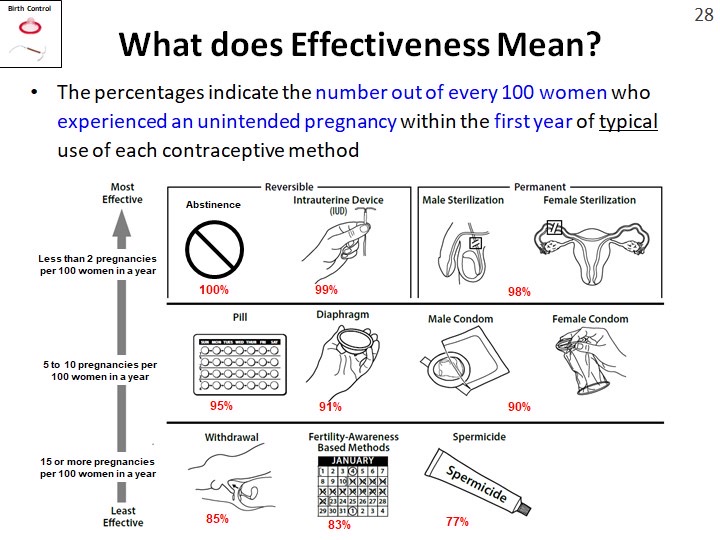
What does the effectiveness mean?
Why do some couples still use less effective methods?
- Cost
- Invasiveness of certain methods
- Religious principles
- Willpower